Saturday, February 22, 2014

Through the Generations: Tanghalang Pilipino Caps Season with Nick Joaquin Classic


At the press conference, organizers tried to foment a 1970s feel, which is the time frame of Mga Ama, Mga Anak, the final offering of the 27th season of Tanghalang Pilipino (TP), the resident theater company of the Cultural Center of the Philippines (CCP). But the period the play depicts is earlier than that, but like any great work of art Mga Ama, Mga Anak is still relevant at any period. Its director, Joel Lamangan, always points out its universality.
            Mga Ama, Mga Anak, for me, has both personal, sentimental value and a huge artistic, philosophical and cultural relevance,he said.
            The play is about the passing of an era, and the pain and frictions it bring, as embodied in a family. The story studies relationships of a former town ilustrado andcaretela kingZacarias Monzon with other members of his family, especially his son. He tries to grapple with the fact of his fading power, wealth and health, and gnawing conflicts with his family. For Lamangan, the coming of new inventions signals the changing of the era, the transition into a new one, the kalesa giving way to the jeepney in the play.
Mga Ama, Mga Anak is the Filipino translation of the three-act Fathers and Sons by National Artist for literature Nick Joaquin, written in 1976. It is an adaptation of his short storyThree Generations.National Artist Virgilio Almario and JosePeteLacaba, Jr. wrote the translation.
            The number of National Artists attached to play attracted Lamangan, who is directing for the first time for TP. Moreover, Mga Ama, Mga Anak is most memorable for him.
This was the first play I did for PETA (Philippine Educational Theater Association),he revealed,starring Ben Rubio, Mario OHara, Bembol Roco, Laurice Guillen and Mia Gutierrez.
            Lamangan was one of the two handymen (with Kryss Adalia), who smashed the table at the final scene of the play.
            I made sure I prepared for it emotionally and physically, with full concentration and internalization,he related.We always get applauded for that.

           
 He further said:But the most important reason why I am excited about this project is that I consider Mga Ama, Mga Anak as one of the most important work of Nick Joaquin. It is in this play that the playwright vividly mirrors the illness of the Philippine societythe recurring appearance of societal threats to our values as a people, the predictable emergence of new predominant foreign culture and world view, and the shameless ease by which we as a people embrace every new modern philosophy, especially that which is introduced by the First World technocrats and bureaucrats, to the detriment of our own distinct folk Filipino traditions.
            The cast of Mga Ama, Mga Anak proves to be stellar, led by Robert Arevalo and Spanky Manikan, alternating as Zacarias Monzon; Celeste Legaspi and Jackie Lou Blanco, alternating as Sofia Monzon, and Cris Villonco as Bessie. TPs artistic director FernandoNandingJosef is also in the cast playing Celo Monzon, Zacariasson. The rest includes Madeleine N. Nicolas, Peewee OHara, Banaue Miclat Janssen and Marco Viana and members of the TP Actors Company (Lhorvie Anne Nuevo, Nicolo Magno, Jonathan Tadioan and Doray Dayao). Production design is by Tuxqs Rutaquio, lighting design by Monino Duque, and sound design by TJ Ramos.


Mga Ama, Mga Anak is be staged on Fridays at 8 p.m., Saturdays at 3 P.M. and 8 P.M., and Sundays at 3 P.M., from February 21 to March 9, at the Tanghalang Aurelio Tolentino (CCP Little Theatre). Tickets available at all TicketWorld outlets at P800 and P400 (students with IDs), with a 20 percent discount for senior citizens, government employees and PWDs. For inquiries, contact TicketWorld at 891-9999 and Tanghalang Pilipino at (02) 832-1125 local 1620-1621, 0917-7500107.

Tuesday, February 18, 2014

Nobody but Nobu

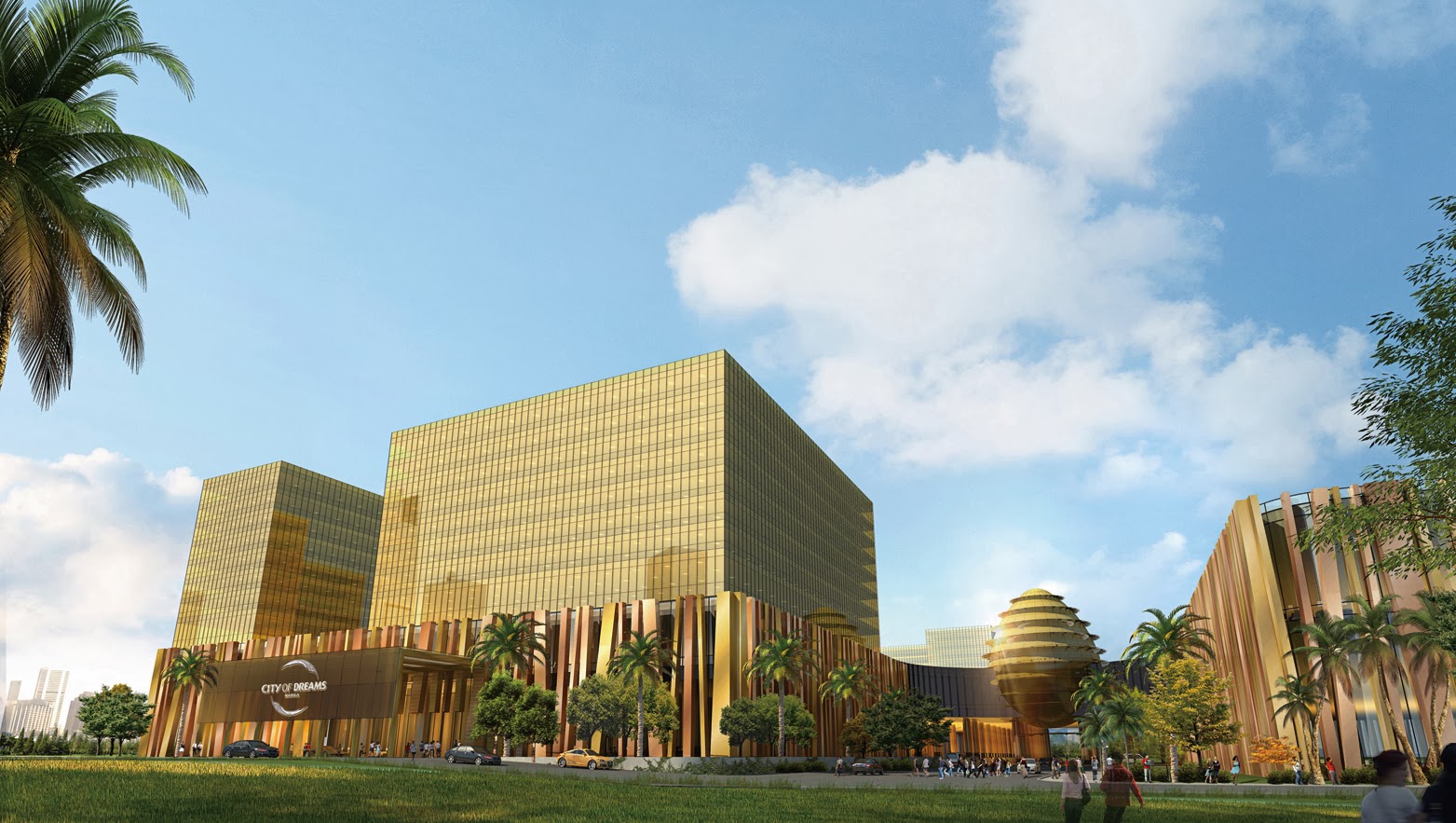
The first in Asia, the Nobu Hotel at City of Dreams Manila is planned to be a 321-room boutique hotel at Metro Manila’s newest integrated leisure development
  Major Hollywood star and Academy Award-winning actor Robert de Niro surprised Asian journalists and businessmen when he appeared at the National Museum of the Philippines on January 27, 2014, to lead the formal announcement of the building of the first Nobu Hotel in Asia here in the Philippines.
The Nobu Hotel Manila will be part of the integrated casino resort City of Dreams Manila along Manila Bay by developer Melco Crown (Philippines) Resorts Corp., a subsidiary of Melco Crown Entertainment Limited, which owns and develops casino gaming and entertainment resort facilities in Asia, in partnership with the SM group Belle Grande of tycoon Henry Sy.
The luxury hotel is said to offer “a fusion of laid-back luxury, high-energy nightlife and exclusive guest room retreats and spa services” and promises to “be the ultimate playground for a Philippines, Asian and international client base, as part of a dynamic array of entertainment, luxury lifestyle and accommodation offerings to be featured at the integrated resort.”
Being Melco Crown Entertainment’s flagship entertainment resort brand, City of Dreams is committed to enhancing the Philippines’ tourism diversity by offering unique, internationally acclaimed hospitality experiences at its integrated resort. I am delighted that City of Dreams Manila has collaborated with chef Nobu Matsuhisa and Nobu Hospitality partners Mr. Robert de Niro and Mr. Meir Teper, together with the entire Nobu Hospitality executive team to deliver Asia’s first Nobu Hotel to Manila,” Lawrence Ho, co-chairman and chief executive officer of Melco Crown Entertainment said. “The partnership, with one of the world’s foremost luxury lifestyle brands within City of Dreams Manila, is a further step in realizing our overall vision to deliver world-class and diverse innovative lifestyle and entertainment offerings to broaden the appeal of the Philippines as a leading leisure destination in Asia.”
The hotel is inspired by the world-renowned Japanese chef Nobu Matsuhisa, who was also present at the Manila press conference along with De Niro, Ho, Hollywood producer and Nobu Hospitality co-founder Meir Teper, Nobu Hospitality chief executive Trevor Horwell and chief operating officer Struan McKenzie.


Nobu opened his own restaurant Matsuhisa in Beverly Hills in 1987, which quickly gained celebrity following. De Niro remembered dining at Matsuhisa 25 years ago.
I never ate in a Japanese restaurant like that before,” he said.
Getting Meir involved, he invited Nobu to open a restaurant in New York, which became successful after a year.
That’s how great Nobu’s food is,” De Niro, who himself co-owns a restaurant, Tribeca Grill, a New York City restaurant offering New American cuisine which opened in 1990, described. “[His food is] creative yet simple…You feel good when you’re eating it. You feel good after you ate it.”
Nobu restaurants also opened in Milan, London, Greece, Dallas, Tokyo, Honolulu, Moscow, Dubai, Budapest and Hong Kong. The restaurant experience was eventually translated into accommodations and residences. There are hotels in Las Vegas, Nevada; and Riyadh, Saudi Arabia, and two more are planned in London and Bahrain.
The Nobu Hotel at City of Dreams Manila is planned to be a 321-room boutique hotel, which will feature a Nobu Restaurant that offers the celebrated cuisine of the chef and an outdoor cabana-style dining terrace situated on an exclusive platform deck with views of Manila Bay. Future guests can expect the signature dishes, sushi and cooked dishes including black cod with miso and lobster with wasabi pepper sauce. They can also enjoy a special in-room menu made by Nobu himself. Additionally, the hotel will also have the Nobu Tea Lounge in the lobby, the Nobu Spa and the Fitness Room at the raised platform deck.

Artist’s rendition of the lobby
 Horwell said: “The new Nobu Hotel at City of Dreams Manila will bring a new level of luxury, celebrity culture and sophistication together with outstanding Nobu-inspired cuisine to the Manila leisure destination scene.”
The 6.2-hectare City of Dreams Manila is one of the four developments at the 100-hectare Pagcor Entertainment City, a planned gaming and entertainment complex on the reclamation area of Manila Bay near the SM Mall of Asia. With an investment of US$1.3 billion, City of Dreams will offer numerous leisure and lifestyle experiences including gaming, entertainment, accommodations, dining and shopping.
The development of City of Dreams Manila is progressing well and is expected to open in 2014,” Clarence Chung, chairman and president of Melco Crown Philippines, said. “I am pleased that City of Dreams Manila has a sound strategic mix of hotel brands—from celebrity-inspired lifestyle for trendsetting leisure and business travelers, a luxurious casino hotel experience for VIPs, to unparalleled services and facilities for MICE and premium business guests. All six hotel towers will meaningfully enhance Manila’s tourism diversity and elevate the hospitality service excellence in the city.”

The envisioned guest room at the Nobu Hotel at City of Dreams
 According to Ho, Melco Crown’s investment in Manila was brought about by the city’s “exciting potentials” and mostly specially by the rightness of the partners, who share the same visions.
Vision is important,” he said. “Everything just fit together.”
We focus on the fun,” Ho succinctly answered to questions if the friction between China and the Philippines affect their plans.
And part of that fun is the dining. “Food experience is very important,” he said, adding that Nobu’s contribution will be stellar. “It is creative in its simplicity… [That’s why] it lasted for more than 20 years.”
For his part, Nobu declared: “I want to see Manila people smiling, eating my food.”

“A fusion of laidback luxury, high-energy nightlife and exclusive guest room retreats and spa services” are promised at Nobu Hotel

Saturday, January 25, 2014

Play to Heal: Unilab Foundation Opens Therapeutic Play Space for Typhoon Survivors


At mid-morning, the area in Cala-Cala by the banks of the Cagayan River, called Isa de Oro, was serene, tall grass swaying in the breeze and the river flowing languidly toward the Macajalar Bay.
The river has a sizable sandbar island.  There was once about a thousand houses here, but it was swept away by the swollen river and the massive flood caused by tropical storm Washi, locally known as Sendong, on Dec. 16, 2011.
What remained was a tall mango tree, which was made into a monument called the Tree of Life. A plaque reads: “This mango tree saved more than 50 people, residents of Isla de Oro, at the height of the unprecedented flooding caused by Tropical Storm Sendong last December 16, 2011.”
The flood came at night. The following morning, people and even animals were clinging to the tree. The unlucky ones were swept out into the sea. Cagayan de Oro City, the commercial and educational hub of northeast Mindanao, along with Iligan City, was one of the hardest hit areas during the storm. Isla de Oro in Cala-Cala was one of the most affected along with the barangays of Consolacion, Macasandig, Kauswagan, Carmen, Canitoan, Iponan and Balulang.

Isla de Oro a year after typhoon Washi


The Tree of Life

The resettlement area in the sitio of Calaanan in the barangay of Canitoan
In its aftermath, Washi, which also struck the Visayas and Palawan, affected 131,618 families, destroyed 51,144 houses and damaged properties amounting to P2.1 billion, making it the world’s deadliest storm that year.
Aid came and many countries launched humanitarian efforts for the survivors. Help was generous. When Marco Flores, director for operations of the Unilab Foundation, arrived in Cagayan de Oro to see how they could help, he saw a surfeit of relief goods that were starting to spoil. Food was taken care of along with other material needs. However, the psychological well-being of survivors were rarely addressed, especially the children’s, the most vulnerable group. There were more than 87,500 children left orphaned and homeless by Washi.
With Rhodora Palomar-Fresnedi, senior vice president for corporate affairs of Unilab, as executive director, the Unilab Foundation thought of building a safe place where children can play and generally be themselves, facilitating healing from trauma and spurring positive growth.

Rhodora Palomar-Fresnedi, senior vice president for corporate affairs of Unilab and executive director of the Unilab Foundation
The Unilab Foundation is the corporate social responsibility arm of the Philippines’ biggest pharmaceutical and healthcare company United Laboratories or Unilab. With a concentration on health, their approach is holistic addressing both the physical, as well as the mental/emotional/spiritual — areas of concern they say that are important but often left neglected. Their projects delve on developmental and therapeutic play, health in public schools, leadership training for healthcare professionals, health of senior citizen and social enterprise.
Cagayan de Oro became the pilot site for its post-disaster developmental and therapeutic play intervention program called Play It Forward. Playing has long been scientifically proven to be essential in children’s growth and important in maintaining well-being as well as helping in the process of healing.
The therapeutic benefits of play is recognized by the Association for Play Therapy in the United States, helping  “children experiencing a wide variety of social, emotional, behavioral, and learning problems, including: children whose problems are related to life stressors, such as divorce, death, relocation, hospitalization, chronic illness, assimilate stressful experiences, physical and sexual abuse, domestic violence, and natural disasters,” says a study by Dr. Linda A. Reddy, Dr. Tara M. Files-Hall, and Dr. Charles E. Schaefer.
 According to Play Therapy UK, between 74 to 83 percent of children receiving play therapy showed positive change, that is, showed “improvement in the emotional, behavioral and mental health of the children.”
The children survivors of Washi have undeniably undergone tremendous stress, most experiencing displacement and many losing loved ones. Before Sendong, they were not afraid of the rain, but after that they cried whenever it rained, related Susan Colades, a community leader in the one of the relocation sites for storm survivors in the sitio of Calanaan, in the barangay of Canitoan.
It is here, in the western part of the city, Unilab Foundation is building its Play it Forward play space. The local government designated an 1.8 hectare area as the resettlement site, the Shell-Gawad Kalinga Village, where 272 houses were built with the help of Shell, the city government and private donors. It took about eight months constructing the houses after Washi. Many Isla de Oro survivors were relocated here. The community sits beside another relocation site built by Habitat for Humanity in 2008. About half of residents are from two to 12 years old.
The local government originally earmarked about 400 square meters of lot area for Unilab Foundation’s play space, which was eventually increased to about 1,200 square meters. The programs will involve building science-based play spaces, developing customized play curricula, and training volunteers to implement the programs and maintain the play spaces over the long term. 
Palomar-Fresnedi said, “We want everyone to realize that play is as essential as food and water; and that it is not a privilege of children, it is a basic right.”         
In building the play space, Unilab Foundation got help from several companies and institutions, experts in the fields of play therapy, human kinetics and architecture.
Architect Angelo Mañosa of the prominent architectural firm Mañosa and Company designed the playground free of charge. The playground has crawl tubes, a sandbox, a three-storey jungle gym and a stage, among others.
The College of Human Kinetics of the University of the Philippines, which specializes on human movement and physical education, gave advice on usage and safety, while the Bulatao Center for Psychology Services of the Ateneo de Manila University’s Department of Psychology, is the consultant in developing the play curriculum development and in training facilitators.
The play space will be maintained by Gawad Kalinga, which works to provide the basic needs of the poor. Unilab Foundation also sought the help of local universities, which provide youth volunteers for the facilitated play.
The playground was much anticipated by the children in the community, who had no space for play and usually resorted to the street. While still to be completed, the Play it Forward play space was opened in October 2013, and children flocked to it. Volunteers began the facilitated play sessions with the children, divided into age groups. Laughing and doing fun activities, they became ordinary children with dreams and desires. Few people will know that they suffered from the trauma of horrors of a storm. With Play it Forward, they are helped to overcome this and grow to be well-adjusted and productive members of the community.


Postscript: Haiyan
A few weeks after the Play it Forward splay space opened in Cagayan de Oro, the typhoon Haiyan, locally known as Yolanda, devastated many parts of the Visayas, especially Tacloban City, considered to be the strongest typhoon in recent history with a death toll exceeding 5,000.
Unilab Foundation is said to be assessing “the sequence of intervention necessary in addressing the emotional recovery of the children affected by Yolanda.”
“An essential element in rebuilding our country after Yolanda’s onslaught is ensuring that the children affected by the disaster are able to continue to develop into holistically healthy adults,” Palomar-Fresnedi said. “Almost five million kids have lost their home, a parent, a sibling, a friend, a school bag, a toy because of Yolanda, but what must never be lost is that space for a child to play.”
She said that “therapeutic play intervention defends that sacred space where children can be kids again. It is through play that a child understands, that a child makes sense of his surroundings. What horror, grief or trauma after a disaster that children can never express in words, they can do so through play. As we invest in the future by rebuilding physical structures, so too must we invest in rebuilding what is broken inside the hearts of our country’s children.”
“The situation needs to be approached delicately and sensitively as it deals with post-traumatic stress of children. If not done properly, it may do more harm than good,” Palomar-Fresnedi further stated. “As with all our programs, we are convening experts who believe in the same health cause and are willing and ready to ‘play it forward.’ We are working with doctors and academicians to come up with a systematic approach for the intervention. This ensures that what we bring in is a long term sustainable solution- therapeutic play with a proven formula of play space plus curriculum.”
She also said: “What we’ve started in Cagayan de Oro for the children affected by Sendong is a prelude. The devastation brought by Yolanda magnifies the need for therapeutic play intervention. Stories of children whose lives were shaken in CDO are the same stories in Tacloban, Samar, Leyte and Cebu. As long as there is a child in need of therapeutic play intervention, we continue to ‘play it forward.’ Because as we rebuild lives, we continue to build a healthier Philippines, one child at a time.”