Monday, December 23, 2024

Magalang’s Christmas Event Features Lubenas Tradition, Dazzling Lanterns and Orchestra Concert


Procession particpants gathered at San Bartolome Church for mass and ‘Ing Banal a Batuin ning Magalang' (Photo by Roel Hoang Manipon)

More than 400 bright Christmas lanterns, in the shape of stars, crosses and fish, and bearing intricate embellishments, lit up the streets in the town proper of Magalang on December 13 for “Ing Banal a Batuin ning Magalang: Lubenas Ning Pasku 2024” (The Holy Star of Magalang: The Christmas Lubenas). 

Organized by the municipal government of the town in the northern part of the province of Pampanga, the Christmas event aimed to promote the Pampangan Christmas tradition of lubenas, which would start in a couple of days on December 16, and to celebrate the 161st founding anniversary of the town, the Aldo ning Magalang (Day of Magalang). It was able to gather 26 groups from almost all of its barangays for a grand procession and lantern competition.  


The Lubenas Tradition

            Among Filipinos, Christmas, which commemorates the birth of Jesus Christ, is the most beloved festivity. It was introduced by the Spaniards during the Spanish colonization of the archipelago and more practices were introduced by the Americans, but Filipinos also added their own flavors to the celebration, particularly the Kapampangans, who introduced the lubenas most likely in the early 1800s. 

            The lubenas, whose name is said to be derived from the word novena, is a procession held in different barangays on eve of the simbang bengi, the dawn mass, for nine days before Christmas. The final lubenas on December 24 is called maitinis in some towns. 

The procession, a land-based kind called limbun, is led by a cross-shaped lantern, followed by people holding poles with twelve parul or Christmas lanterns, arranged in two rows, representing the twelve apostles of Jesus Christ. It also includes lanterns in the shape a fish, a symbol of Christ, or other animals such as lamb, dove and those that usually figure in the Nativity scene; the image of the barangay’s patron saint, carried on the shoulder or mounted on a carroza, illumined by a giant lantern behind it; and singers singing “Dios te Salve.” Early paruls were simple, made of paper and lit by candle flames. Over the years, lanterns became bigger and more elaborate. Additionally, carbide lamps and then electric light bulbs were used.

            The lubenas were practiced in several towns around the foot of Mount Arayat in Pampanga, and in some towns in the neighboring province of Tarlac. The devotional practice though has diminished over the years. The towns and cities with existing lubenas include Bacolor, Angeles City, San Fernando City, Mabalacat, Mexico, Magalang, Santa Ana and Santo Tomas in Pampanga; and Bamban, Capas and Concepcion in Tarlac. Santa Ana also practiced making the majigangga, giant scary puppets symbolizing evil, which danced on the streets of the town from December 16 to 24 and would be banished by the coming of Christ. The last known practice was held in 2021. 

            In recent years, there is renewed interest on the lubenas and its revival. A recent development of the practice is additions made to be a holiday attraction such as lantern competitions and touristic spectacles such as a grand gathering, like the “Ing Banal a Batuin ning Magalang,” which is considered as an introduction to the lubenas.


Reinvigorating the Lubenas 

            For the reinvigoration of the lubenas and lantern-making in Magalang, master lantern maker Renato “Rene” Calma from Cutcut, Angeles City, was tapped to teach younger MagaleƱos how to make the parul, including techniques and decorative features that he himself devised.    

The local government granted subsidies for the barangays for the making their lubenas lanterns, adding to the resources that residents were able to pool together.   

            At the “Ing Banal a Batuin” event, 26 contingents of procession participants converged at Magalang’s San Bartolome Church, many in costumes inspired by traditional Filipino or old attires, and religious imagery, bearing the lanterns they made in the past weeks. 

            A mass was held in the early evening, followed by the lantern parade and a mini concert featuring the Philippine Philharmonic Orchestra and the vocal group The Nightingales, presented in partnership with the Cultural Center of the Philippines. 

The event, led by Magalang mayor Maria Lourdes Paras Lacson and tourism officer Ryan Miranda, was graced by local and national government officials and representatives as well as tourists, who were afforded a glimpse of the lubenas in a grand manner.

            The night culminated with announcement of the winners of the lantern competition. The barangay of San Jose was again declared as the champion. The contingent was also judged champion in the last two years of the competition. The designer of the lanterns is Syrus Feliciano, who learned the craft from Calma. The lanterns were made by residents and young people led by the Sangguniang Kabataan of the barangay. 

            The other winners are contingents from the barangays of Santa Maria (second place), Santa Lucia (third), San Isidro (fourth), and San Ildefonso (fifth).

            The San Jose group was invited to participate at the country’s biggest multi-arts festival, Pasinaya: The CCP Open House Festival, on February 4 at the Cultural Center of the Philippines Complex in Pasay City, promoting the Pampanga Christmas lanterns. 


From Magalang to Milan

The local government of Magalang was able to promote the lubenas and the craftmanship in latern-making abroad. With the support of the Consulate General of the Philippines, led by consul general Elmer Cato, and the Filipino community in northern Italy, Pampanga lanterns made an appearance at the Basilica di Santo Stefano Maggiore in Milan during a simbang gabi on December 15. The lanterns were designed and made by Calma, commissioned by the Magalang government. 

The lanterns again appeared at the Duomo di Milano or the Metropolitan Cathedral-Basilica of the Nativity of Saint Mary for the second day of simbang gabi. 

The giant parul Sampernandu, which traces its roots to the lubenas tradition, has been showcased internationally several times in the past. The Milan events are said to mark the first time for lubenas lanterns to be shown internationally, bringing Filipinos abroad closer to home and their heritage in Christmas celebration.


Early forms of Pampanga's lanterns were lit by candlelight (Photo by Roel Hoang Manipon)


Procession particpants gathered at San Bartolome Church for mass and ‘Ing Banal a Batuin ning Magalang' (Photo by Roel Hoang Manipon)

The 12 paruls represent the 12 apostles of Jesus Christ (Photo by Roel Hoang Manipon)

The fish-shaped lanterns of the Santa Lucia group (Photo by Roel Hoang Manipon)

The residents of Camias gathered at the Virgen Delos Remedios Chapel to make their lanterns in early November (Photo by Roel Hoang Manipon)

A contingent from San Pedro II (Photo by Roel Hoang Manipon)

The eye-catching lanterns of the San Isidro group (Photo by Roel Hoang Manipon)

The group from San Jose was declared champion for third time (Photo by Roel Hoang Manipon)


Saturday, December 21, 2024

Baguio Lights Up for Christmas

Baguio City's Christmas tree is made of stained-glass windows showing Chrstmas images (Photo by Roel Hoang Manipon)


Visitors and vacationers flocked to Baguio City during the last weekend of November and as December arrived. The commercial hub in the mountainous Cordillera Region has been a favorite getaway of Filipinos, especially during the dry, hot months and holiday, including the Christmas season. Perhaps the nippy weather is closely associated with the one of most beloved holidays, perhaps making the air of Christmas much more intense. And Baguio City has prepared events and attractions to delight holiday excursionists.

            Last December 1, the city government unveiled its own Christmas tree in a well-attended lighting ceremony at the upper portion of the city’s busiest and most historic stretch, Session Road. The program, graced by local government officials and employees, included performances by the SLU (Saint Louis University) Marching Band, University of Baguio Voices and the University of the Cordillera Dance Company.

            Erected on a central island of a roundabout, Baguio City’s Christmas tree is of modern design by architect Nikki Monica Perez—an assemblage depicting stained-glass cathedral windows that show classic Christmas images—visible even from the end of Session Road and Burnham Park. It is described as “a fusion of art and faith that is meant to be more than just decoration. It aims to reflect the values of our city charter and the aspirations of our city as we continue to move forward and celebrate our milestones and cherish our learnings this year with faith, love and hope. The tree is deemed to be a place of reflection and also as a visual prayer. As we gather around it, we are transported to the first Christmas night, experiencing anew the wonder and joy of that sacred moment. The tree is envisioned to become a symbol of hope, reminding us of the promise of salvation and the enduring power of love. In a world often filled with chaos and uncertainty, this stained-glass nativity tree would stand as a testament to the enduring light of Christmas, a beacon of faith and hope for all who behold it.”

“It truly tells us the story of Christmas and the characters and events that surround it,” Baguio City mayor Benjamin Magalong enthused. “This year's design will remind us right away of the real reason for the season, the birth of our Savior, Jesus Christ. 

In his speech during the lighting ceremony, he explained: “As we light this sacred edifice tonight, may it serve as a reminder of the values of faith, hope, and love. Faith in the goodness of humanity and the divine plan that guides us even in uncertain times. Faith in each other and faith in our city's leaders. Hope amidst all the challenges that we face today—climate change, diseases, pandemics, political instability and corruption. Just as these lanterns illuminate our path tonight, may hope light our way as we rebuild, renew, and aspire for a better tomorrow for the city and the whole Filipino nation. And above all, love, the greatest gift of all. It is love that drives us, our acts of kindness, compassion, and generosity. It is this season of giving and let us embrace the spirit of love, not only for our families and friends, but for those in need, for our environment, and for the generations that will follow.”

            The lighting ceremony was followed by another annual city attraction, the 16th SLU Lantern Parade. This year, the lanterns were in the shape of cultural icons of different countries. The parade went down Session Road, which sparkled with Christmas lights and lanterns. 

            The Christmas tree lighting ceremony and the lantern parade are part of An Enchanting Baguio Christmas 2024, a series of events and attractions prepared by the city government and the Baguio Tourism Council. 

            Last November 28, the Baguio Christmas Market was opened at the Rose Garden of Burnham Park. Inspired by the Christmas fairs of Europe, it features stores in thematic designs, rides and regular shows. Baguio Botanical Garden was also spruced up for Botanical Christmas Garden with Faith, Hope and Love. Another popular attraction is the Baguio Country Club Christmas Village.

            Every weekend, the city mounts free shows together with the city’s academic institutions and performing arts groups. Notable ones include The Nutcracker Suite by the Ballet Baguio; the “University of Baguio Christmas Cantata: A Journey to Bethlehem;” the “YesUCan Concert” by the University of the Cordilleras; and a drag show, “Frost and Fierce: An Enchanting Christmas Drag Race” on December 21.

The Simbang Gabi (Anticipated Mass) tradition will be held at Rose Garden from December 15 to 23.

For local communities, different contests and activities are also lined up. 

            An Enchanting Baguio Christmas 2024 will culminate with New Year’s countdown event at the Melvin Jones Grandstand on December 31 and An Enchanting Baguio Christmas 2024 Closing Ceremony on January 5, 2025.


The Baguio Christmas Market at the Rose Garden of Burnham Park (Photo by Roel Hoang Manipon)

A water fountain and light show at the Baguio Christmas Market  (Photo by Roel Hoang Manipon)


The SLU Lantern Parade, another annual attraction, followed after the Christmas tree lighting ceremony (Photo by Roel Hoang Manipon)

Historic Session Road is lit up for the holidays (Photo by Roel Hoang Manipon)


Saturday, September 21, 2024

Speculating as Form of Resistance: The 12th Active Vista Human Rights Festival

The opening of 12th Active Vista Human Rights Festival at University of the Philippines Diliman (Photo by Roel Hoang Manipon)

With members of the Kontemporaryong Gamelan Pilipino or Kontra-GaPi playing the kulintang and performing traditional Moro dances, and booths by artists and advocacy groups offering books, artworks, stickers, etc. to attendees, the twelfth staging of Active Vista Human Rights Festival (AVHRF) opened on September 19, 2024, at the UPFI (University of the Philippines Film Institute) Film Center of the University of the Philippines in Diliman, Quezon City.

            Stationed by near the driveway of the UPFI Film Center was the Courageous Hope Van, bringing in splashes of color against the backdrop of the gloomy and rainy weather and the brutalist venue. The Courageous Hope Van is one of the mobile cafes of Silingan Coffee, a livelihood and educational project of Redemptorist Brother Jun Santiago established in 2021 with the help of Respond and Break the Silence Against the Killings or RESBAK, a group of artists and media practitioners. Based at the Cubao Expo, Silingan Coffee is manned by families affected by former President Rodrigo Duterte’s bloody and misguided war on drugs and other human rights violations. Aside from being a cafĆ©, it also has an exhibit on the extrajudicial killings and is a venue where people can hear the stories of the victims and learn about human rights. The cafe also has three vans—the Justice Van, the Pananagutan Van and the Courageous Hope Van—bringing coffee, drinks and snacks as well as advocating for human rights. Artists collaborated to paint the Courageous Hope Van, which was unveiled at the AVHRF opening.  

Organized by non-governmental organization DAKILA and its Active Vista Center, AVHRF has been held annually on the week of the anniversary of the declaration of Martial Law, one of the darkest chapters in Philippine history, to put a spotlight on human rights, freedoms and dignity.  

“What began as a humble film festival in 2008, the Active Vista Human Rights Festival, 16 years later, is still striving to reach the broadest and widest audience possible in our pursuit of sustaining a movement that respects, upholds and values the dignity, rights and freedoms of all,” said festival director Alex Poblete during the opening program. 

AVHRF has mounted film screenings, art exhibits, talks, fora and performances to bring “attention to stories of human struggles” and to aim “at engaging the public in conversations on important social issues toward developing a critical citizenry that supports initiatives for the promotion of human rights and democracy in the Philippines.”

            Running from September19 to October 6 this year, AVHRF carries the theme “Espekulasyon” (Speculation).

“It has been said time and again that the price of freedom is eternal vigilance. But what is vigilance if not an act of speculation? And to speculate, to be vigilant is to imagine alternatives, question the status quo, and ask the simplest yet most radical question. What if things were different?” said Poblete.

She deplored how the state of and respect for human rights have deteriorated. 

“In recent years, human rights have taken a severe hit around the world. In the Philippines, the previous government significantly undermined human rights, painting advocates in a bad light, which paved the way for authoritarianism to grow, deepen social divides, and fuel the culture of violence and intolerance,” she said.“Globally, the rise of populist and authoritarian leaders has led to shrinking civic spaces, setbacks for democracy, widespread disinformation, attacks on fundamental rights and freedoms, silencing of dissent, and harsh crackdowns on human rights defenders and activists.” 

She further said, “The Philippines, dubbed as Patient Zero of the populist and authoritarian playbook, made a monumental leap from being a bastion of people power and democracy in Asia to repeating its history of being under the authoritarian rule of Duterte, and now, the Marcos administration.”

She explained that attacks “on the rights and freedoms of the people continue to escalate and worsen, resulting in a climate of fear that silences dissent and expression, and affects the already declining state of the civil society movement,” and that “worsening economic conditions further dehumanize people's lives, forcing us into a perpetual state of survival, exhaustion, and hopelessness in a nation with a seemingly bleak future.”

Poblete said that spotlighting stories from the margins, the festival aims to invite audiences “to examine the truth in a world shaped by the narratives of those in power,” recognizing that narratives play a crucial role in shaping culture, and to take “its viewers to see the world not as it is, but as what it could be, opening conversation through films, performances, art, and music, ushering them in a critical discourse through forums and talks that encourage in-depth reflection on a future beyond what it is.” 

With the theme, the festival “invites audiences to wander together into the world of possibilities, to imagine a future where gripping into hope does not bleed and a better reality is within reach.” 

“For in this world of uncertainties, where the future is bleak, to speculate is to resist,” she emphasized.

The festival opening featured the Ukrainian film The Editorial Office, directed by Roman Bondarchuk, which had its world premiere at the 74th Berlin International Film Festival in Germany. Set in pre-invasion Ukraine, it shows “the plight of a journalist in his journey to expose the truth amid a storm of fake news and political shenanigans,” Poblete said.

“Much like their experience, the Philippines is no stranger to populist rule. Time and again, individuals and political dynasties have risen to power through rampant historical distortion and widespread disinformation, challenges that we still grapple with today,” she explained. “We hope that the film may serve as a poignant reminder that in a world where power dictates the narrative, to seek the truth is itself an act of resistance.” 

The screening was preluded by the solidarity message of Rebecca Mason from the International Programs and Operations and Stakeholders Relations of Journalists for Human Rights and followed by a talkback with Pochoy Pinzon Labog, human rights lawyer, artist and member of the Active Vista Board of Trustees; Carmela Fonbuena, executive director of the Philippine Center for Investigative Journalism; Patricia Aquino, podcast producer of Journalists for Human Rights; and Jonathan de Santos, chairperson of the National Union of Journalists of the Philippines tackling challenges on pursuing journalism, media freedom, and the spread of disinformation.

“As documented annually by Reporters Without Borders Press Freedom Index and by Amnesty International, media freedoms and human rights are increasingly under attack around the world, and the risk to journalists and human rights defenders are real. Myths and disinformation campaigns against democracies or regional powers pose challenges for good governance,” Mason explained. “With the upcoming elections, the role of the media has never been greater to promote and protect human rights and to work collaboratively to enhance and protect the participation of all citizens in democratic politics. Red-tagging, intimidation tactics, the suppression of and attack on truth-tellers, journalists, media groups, and activists continue.”

“Media development is one of the earliest and efficient ways to intervene, to help stabilize conflict and fragile state situations, allowing journalists to remain in their communities, carrying out their critical work safely to support their country's growth and development,” the officer from the Canada-based NGO further said.

“I encourage us all to continue to dream, to challenge, to question and to create, so together we can realize a world where press freedom and human rights come to live by all,” she said. 

Several other films are screened in the festival’s 20/20 Film Screenings, aimed at bringing “focus to narratives of different stories at the margins of our sight to see the world in 20/20— with an awareness of those in the peripherals, with sharpness and clarity of vision, with a depth of perception, and hopefully, through the lens of humanity.” This year’s slate includes Alipato at Muog, 11 Days in August, Ghosts of Kalantiaw, Balota, 11,103 and Tumandok.

Another festival component is the Panorama: Festival Events which includes a public gig (“Delulu Night: Manifesting Our Vision of a Better Nation,” featuring Leanne & Naara, Autotelic, Any Name's Okay, Uncle Bob’s Funky Seven Club, Shanne Dandan, and AIIZ), an art market, cartooning workshops and exhibit (PAK DEM! Political Cartooning for Democracy and Human Rights), a staged reading, and the awarding of the Frames, the AVHRF Short Films Competition.

Complementing the film screenings are the Viewpoints Festival Forums, which tackle the different issues. This year, the forums will focus on critical thinking and democracy in anticipation of the 2025 Philippine Midterm Elections. 

A new addition to this year’s festival is Perspective: Weaving Narratives for Change, a by-invitation-only series of talks, workshops and other activities that brings together storytellers, creatives, filmmakers, artists, journalists, civil society organizations, activists and human rights advocates “to foster collaboration for the human rights cause and to weave the power of narratives with social movement strategies in driving positive social change and in shaping progressive democratic futures.” The lineup includes Cross-Culture Program: Synergy with “Holy Shit! Can Poop Save The World?” Screening; Storytelling for Social Impact: Creating Art That Matters; Plot Twist: Creative Storytellers for Change; Climate Story Lab; Kwento Namin ‘To; and Climate Story Lab Pitching.

Not confined to Metro Manila, AVHRF has satellite events happening simultaneously in select areas around the country such as Cebu, Bacolod City, Iloilo, Cagayan de Oro City, Dumaguete City and Laguna. 

Poblete said that festival also “pays homage to filmmakers and artists who have catalyzed change in the audience's perspective through their compelling storytelling and artistry.” This year, it is paying tribute to filmmaker and screenwriter, Armando “Bing” Lao, who passed away on 18 June. 

For more details and festival schedule, one may visit the Active Vista Facebook page or their website (http://avhumanrightsfestival.ph).


The Courageous Hope Van of Silingan Cafe (Photo by Roel Hoang Manipon)


The Kontemporaryong Gamelan Pilipino  performing at the opening (Photo by Roel Hoang Manipon)

Talkback after the screening of 'The Editorial Office' with journalists and human rights advocates (Photo by Roel Hoang Manipon)


Tuesday, August 20, 2024

Marie Frances B. Macabenta: Sweetening and Salting the Bitterness

Chocolate maker and Balai Cacao owner Marie Frances Macabenta (Photo by Roel Hoang Manipon)

The province of Bohol is mostly known as one of the Philippines’ popular tourist destinations with its white-sand beaches, heritage churches, tarsiers and the Chocolate Hills. Lesser known about the Central Visayan island is that there are several chocolate makers making their own chocolate products. 

            One of them is Balai Cacao, which is based in a residential area in the district of Manga in Tagbilaran City, the capital of Bohol. The bungalow is actually nondescript except for a small sign. It is actually the home of its owner and founder, Marie Frances Buyco Macabenta.

            Macabenta actually has been a teacher for many years and started a small chocolate business, the Balai Cacao, which means “house of chocolate.”

“It started in 2011 as a passion and for my personal interest because I had a heart bypass in 2011. And I learned that chocolates—or dark chocolate specifically—is very good for my heart health. So, I did the research and I became interested in it. And so, I learned it from an elderly woman who is vending budbud (local rice cake) and sikwate (chocolate drink) in the neighborhood,” she related. “And so, I asked her to teach me and I learned from her. And that became my passion. And I was teaching then. I was in the academe for twenty-one years. On the side of my teaching job, I did tablea (chocolate tablets). I sold it to my friends, relatives. And so, it became a hobby and later on an income-generating project.”

            Macabenta actually hails from La Paz, Iloilo City, Iloilo, but she married a Boholano, and moved to Bohol. Coming from Iloilo, which is known for its cuisine, an enterprise related to food is not a far-fetched idea.

            In  2013, they bought a piece of land in San Isidro, Tagbilaran, and her husband became interested in cultivating cacao trees. 

“So, he planted cacao and he gave away some seedlings to the fathers in the neighborhood. Later on, we saw children roaming around and ang papayat nila tapos nakakatuwa din na (they were so skinny and they were also amusing because) they were very responsive.”

Concerned about the plight of the children, they decided to help through outreach to the children and then to the mothers, organizing feeding programs and catechesis Sunday school, giving them sikwate and champorado.

They also helped the parents, especially the mothers, organize a savings group, and introduced an income-generating project. 

“Una ‘yung (First, it was) soapmaking pero (but) later on we realized na not everyone can be entrepreneurs. We thought about it; we prayed na ano kaya kung itong tablea gagawin nating (what to do, what of we make chocolate making a) business and we employ the mothers. And so that's what we did,” Macabenta related. 

Thus, in 2017, she registered Balai Cacao enterprises, and hired the mothers of the children. 

She said, “We thought it was a sustainable way of helping the community. And later on, in 2019. I thought about it very hard and deep, and decided that I will leave the academe after twenty-one years of teaching. And so, I did not wait for retirement. Sana magre-retire ako at the time, mga nine years pa ang aabutin (It would take nine years before I retire). So, I decided to resign. But the university gave me a gratuity pay na ginamit ko rin na (which I used as) capital for my tablea business.”

            She also found support from initiatives such as the Canada-funded Great Women Project and programs for women entrepreneurs of Department of Trade and Industry and Department of Science and Technology. 

            She continued: “My husband bought me a grinder na parang sinasaksak sa kuryente pero (an electric one but) very simple grinder. So, I didn't have to go to the market para ipa-grind yung aking tablea (to have my chocolate ground), and that was how I started—[with] Php5,000 and then the grinder and then this dirty kitchen. And then we improved it. And then later on, of course, when the pandemic came, we made the factory. That was in 2019.”

            Macabenta also enhanced her skills in chocolate making as well as in marketing by enrolling in different trainings.

“So, I learned the science of making tablea because I only learned it from experience and from, of course, my mentor, ‘yung elderly woman, si Nanay Paping. Later on, pati chocolate making tinuruan kami and DTI also helped me with the packaging. At first nag-introduce ako in a box, and then later on, I learned the craft and made some designs already,” she divulged. 

            Her enterprise thrived despite the pandemic. When her husband retired, he was able to help her out. They slowly improved their home-based factory, and found a supplier for good quality beans.

            From the simple, tablea, the coin-shaped unsweetened chocolate used to make chocolate drink, she was able to create other chocolate products such as nibs, candies and chocolate barks with nuts and seeds. Her latest products contain asin tibuok, the artisanal sea salt of Bohol, which is a heritage product that is in danger of vanishing.

            She discovered asin tibuok through tour guides, who became their friends when they ventured into farm tourism. They invited the couple to visit a salt-making workshop. 

“So pumunta kami (we went) and then we learned na ganoon pala kahirap ‘yung kanilang dinadanas just to preserve the asin tibuok, ‘yung heritage nila. And then triny din namin, kasi gumagamit na rin ako ng asin sa chocolates, ‘yung Himalayan salt. Pero na-taste ko na mas maganda ‘yung taste ng asin tibuok. Para kasing may smoky flavor na kino-compliment niya ‘yung chocolate. At saka, since very conscious kami sa health—dark chocolate ‘yung sa amin—so parang nate-temper niya or naba-balance niya ‘yung taste ng sweetness. At saka ‘yung beans din namin, dahil nga fermented siya, fruity flavor, so nako-compliment din nung fruity flavor ng asin tibuok (We went and then we learned how difficult it is for them to preserve asin tibuok, their heritage. And then we tried it because I also use salt in chocolates, Himalayan salt. But I tasted that asin tibuok has a better taste. It's like it has a smoky flavor that complements the chocolate. And since we're very health-conscious, our chocolate is dark, so it tempers or balances out the sweetness. And also our beans, because they're fermented, have a fruity flavor, so the flavor is complemented by the asin tibuok),” she enthused.

            Macabenta started using asin tibuok coming out with chili chocolate flakes with asin tibuok, sesame chocolate barks with asin tibuok and chia and oat chocolate barks with asin tibuok. She also put a dash of asin tibuok on her sikwate

“I've been using asin tibuok with my sikwate. Iba ang taste ng sikwate with asin tibuok. Ang asin kasi naba-balance niya rin yung tamis. Cacao is really bitter. Bitter lang siya sa sarili niyang taste pero lalagyan mo ng sugar para naman matabunan ‘yung bitterness pero dark chocolate pa rin yung aming sikwate. Para hindi masyadong matamis, at saka may flavor siya na unique din, nilalagay namin ng asin tibuok (It tastes different with asin tibuok. The salt also balances the sweetness. Cacao is really bitter. It's just bitter on its own but you add sugar to cover up the bitterness but our chocolate drink is still dark chocolate. To be not too sweet, and to have a unique flavor, we add a dash of asin tibuok),” she enthused.

            Her use of asin tibuok is her way of helping this element of cultural heritage continue, and she said she frequently promotes it so that makers can sustain their craft and tradition.

“Every time kung may chance ako (If I have the chance), I tell some of my friends not just about my chocolates but also about asin tibuok,” she said. 


Balai Cacao is a home-based operation in Tagbilaran, Bohol  (Photo by Roel Hoang Manipon)


Some Balai Cacao products using asin tibuok  (Photo by Roel Hoang Manipon)

Macabenta making chocolate drink the traditional way and using asin tibuok of Bohol (Photo by Roel Hoang Manipon)

Macabenta making chocolate bark with asin tibuok (Photo by Roel Hoang Manipon)


Sunday, August 18, 2024

Makati City Holds LGBTQ+ Pride Event to Spread Love

Makati City's event to celebrate LGBTQ+ love and inclusion (Photo by Roel Hoang Manipon)
 

While some LGBTQ+ Pride marches have been held in Makati City, prominent of which is the Philippines’ longest running Pride march, the Metro Manila Pride March, on December 8, 2012, with about 1,500 attendees, a major Pride event was spearheaded by Makati City government, led by its mayor, Abigail “Abby” Binay-Campos, for the first time on July 27, 2024.

Intended to be a celebration of diversity, equality, inclusion and love, “Spread the Love, Makati!” was held on a closed-off section of Makati Avenue in the barangay of Poblacion from 10 a.m. to almost midnight, with city officials gracing the event including congressmen Luis Campos and Kid PeƱa, vice mayor Monique Lagdameo, and the city councilors. Binay-Campos said the event is also a “movement towards understanding, acceptance, and support for everyone in our diverse community, regardless of their background.”

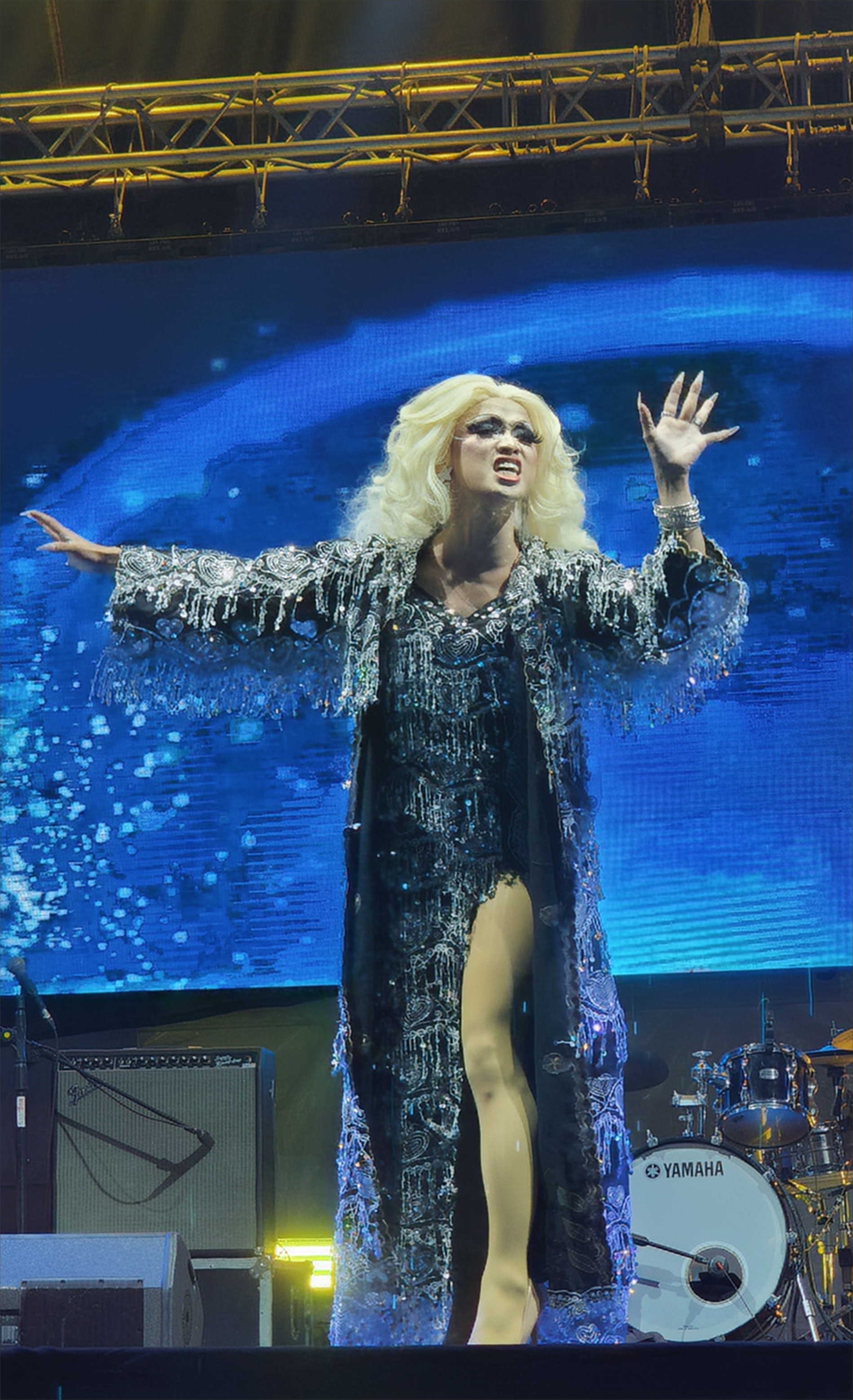
LGBTQ+ organizations and advocates, such as Metro Manila Pride, also led in the organization of “Spread the Love, Makati!,” together with Makati City’s Museum and Cultural Affairs Office and the Makati Gender and Development Council, and the event had a program that featured drag queens and several celebrities such as Nadine Lustre, Heart Evangelista, Karen Davila, and Angela King.

            The day began with a series of talks, held at different hotels in the area, tackling issues for inclusive development and cultural diversity as well as gender sensitivity, addressing discrimination, health needs of the LGBTQ+ community, and meaningful allyship—“Understanding SOGIESC: The Importance of Gender Sensitivity and the Call for the Passage of the SOGIE Equality Bill” at Saint Giles Hotel with speaker Janlee Dungca of Castro Communications; “Differentiated Care: Understanding the Health Needs of the LGBTQIAP+ Community” at Coro Hotel with speaker Benedict Bernabe; “Pride in Business: The Journey from Awareness to Allyship” at the City Garden Grand with speakers Bobby Batungbacal from the Makati Business Club, Ichi Yabut from the Makati City Government, Junie del Mundo from The EON Group and Weena Ekid from Philippine Financial and Inter-Industry Pride (PFIP), who shared highlights from PFIP’s 2024 Philippine LGBTQ+ Workplace Inclusion Report; and “Beyond the Rainbow: Confronting Internalized Homophobia in the LGBTQIA+ Community” at I’M Hotel with speakers Ruel Bayani of ABS-CBN television network, filmmaker Milo Sogueco and writer G3 San Diego. 

There were also workshops on drag makeup and styling with drag queen Tiny Deluxe and on photography and painting with Niccolo Cosme at Hoesik Bar and Lounge.

            Part of the venue, which was styled by acclaimed visual artist Leeroy New, hosted a fair with booths by local and LGBTQ-owned businesses selling food and merch as well as by LGBTQ+ groups to promote their causes, including a free HIV testing stall. Different games and activities were also prepared for the attendees. 

            In the afternoon, street dancing performances with different groups including the. Intensity Dancers, DJ sets by Moira Lang and Dignos, street voguing with Nunoy Revlon and his dancers, and the unfurling of a giant rainbow flag led to the main program, which started at 6 P.M. and provided an opportunity for guest celebrities to express their solidarity. 

“We are here to celebrate love,” said Evangelista. “I like to share the stage with all of you. We are present and not at the farthest of reaching because each and every single one of us here holds something very special in our hearts, something that is very unique, a unique kind of spring that blossoms internally, and that is the sense of self. And we should celebrate it. We should hear it.”

“In this world they say love is intangible but indeed on this night it has been made present because of all of you. We shall celebrate it and we shall champion it,” she ended.

Davila emphasized the importance of equality and inclusion, and that inequality affects many aspects of life. 

“Nagsisimula po and inclusion, diversity and the belief in equality sa ating mga tahanan (Inclusion, diversity and the belief in equality start at home),” the veteran broadcast journalist said, calling out abuses that LGBTQ+ people undergo at homes. 

She further said, “Ating tandaan sa mata ng Panginoon, pare-pareho lang tayo (Let’s remember that we are all the same in the eyes of God)…The Philippines is one of the most tolerant countries in the world when it comes to gays, pero bakit ayaw natin silang bigyan ng karapatan na patas sa atin? Bakit po gusto lang natin tino-tolerate sila? Ang tunay na patas ay iisa lahat sa ilalim ng batas (but why don’t give them rights that are equal to ours? Why do we just tolerate them? Real equality is all the same under the law). So to the gay community, It’s an honor to be here celebrating with all of you.”

Lustre, King and Tim Yap also shared their messages to the community as well as couple Ice Seguerra and Liza DiƱo, who sent a video message. 

Other celebrities who joined were Geneva Cruz, Top Suzara of the band Freestyle, Mark Bautista and Nicole Laurel Asencio, who also performed for the community. 

            “No matter what you went through, you are loved through and through,” said Asencio. 

The lineup of performers also included “Tawag ng Tanghalan” alumni Anton Antenorcruz, Raven Heyres, and Saga who sang in their latest collaboration, “Say It Clear, Say It Loud,” which was produced by Boy Abunda; and the band La Crema. Drag performers from O Bar and the House of Ding including house mother and Drag Race Philippines’ first season contestant Brigiding brought energy and vibrance to the stage.

After-parties were held at Dr. Wine, Sanctuary, I’M Hotel Poolside, Sprits Library and other bars in the area.


Different booths and activities (Photo by Roel Hoang Manipon)

Heart Evangelista and Karen Davila (Photo by Roel Hoang Manipon)

Nadine Lustre (Photo by Roel Hoang Manipon)

Nicole Laurel Asensio (Photo by Roel Hoang Manipon)

Top Suzara of Freestyle (Photo by Roel Hoang Manipon)

Geneva Cruz (Photo by Roel Hoang Manipon)

Angie King (Photo by Roel Hoang Manipon)

Brigiding (Photo by Roel Hoang Manipon)


La Crema (Photo by Roel Hoang Manipon)

The House of Ding (Photo by Roel Hoang Manipon)

The queens of O Bar (Photo by Roel Hoang Manipon)

A drag performer from O Bar (Photo by Roel Hoang Manipon)


Friday, August 16, 2024

Amsterdam Rainbow Dress Sashays to the Philippines

Amsterdam Rainbow Dress on display at the Trinoma Activity Center in Quezon City (Photo by Roel Hoang Manipon)

Aside from garnering a record-breaking attendance, the Philippine LGBTQ+ Pride Month celebration and protest, Love Laban 2 Everyone: Pride PH Festival 2024, had another notable feature—the wearable installation Amsterdam Rainbow Dress, which was brought the country and to Southeast Asia for the first time.

The installation is a dress made of the national flags of countries where being LGBTQ+ or LGBTQ+ acts are illegal, punishable by imprisonment, torture and even death. When a country adopts LGBTQ+ inclusive legislation, its flag is replaced with a rainbow flag. The dress, which has a diameter of over 16 meters or 52 feet, is made up of 68 flags, the bodice made from the city flag of Amsterdam, the capital of the Netherlands. The European country is notable in LGBTQ+ history, being the first to legalize same-sex marriage. 

The Amsterdam Rainbow Dress traces its roots to the Euro Pride/Amsterdam Pride 2016. At the Pride Walk parade held on the opening day on July 30, flags of 75 countries where homosexuality was illegal in 2016 were carried. These flags were afterwards presented to Arnout van Krimpen, Jochem Kaan, Oeri van Woezik and Mattijs van Bergen, who spearheaded the creation of the dress with volunteers from COC Nederland, a LGBTQ+ organization, and the Amsterdam Museum. The Amsterdam Rainbow Dress was unveiled on 5 August 2016. It has been brought to many parts of the world and was used in many art photography projects, with the aim of raising awareness on the global struggle of the marginalized community and of advocating for acceptance and equal rights. 

The Philippines is one of countries that the dress is brought to, bringing more significance to Love Laban 2 Everyone: Pride PH Festival 2024 on June 22, 2024, in Quezon City.

According to organizer Pride PH, a network of LGBTQ+ groups, and the Amsterdam Rainbow Dress Foundation, the “presence of the Amsterdam Rainbow Dress at this year's Pride highlights the international solidarity for LGBTQl+ rights, reminding us that the fight for equality transcends borders.” 

“With the world's eyes on the Philippines, it is imperative that we seize this moment to pass laws that are inclusive of the LGBTQI+ community and persons of diverse SOGIESC (sexual orientation, gender identity, gender expression and sex characteristics),” they further stated.

An art photography shoot was mounted featuring comedian, actor and host Vice Ganda, one of the most prominent Filipino LGBTQ+ personalities.  The project had Vince Liban, Jap Ignacio and Jaymie Reyes as project managers, and filmmaker and Drag Den creator Rod Singh as creative producer. Vice Ganda was photographed wearing the dress, with one photo showing the Quezon Memorial Shrine in the background, by the duo of Cenon and Mav (Cenon Norial III and Mav Bernardo).

After Love Laban 2 Everyone: Pride PH Festival, the installation was on display at the central atrium of the mall TriNoma in Quezon City on June 25 and 26. It was accompanied by multi-colored panels that showed some highlights in Philippine LGBTQ+ history including the march of a lesbian collective during International Women's Day in 1992; Pro-Gay Philippines’ rally at the Quezon Memorial Circle, called Stonewall Manila, in 1994; the very first Pride March in the Philippines and in Asia in 1996; a gay political party, Ang Ladlad, appeared on the ballot for the first time, fighting for the Anti-Discrimination Bill, in 2010; the Metro Manila Pride March and Festival: Here Together with more than 8,000 attendees in Marikina City the 2017;  the Metro Manila Pride March and Festival: Rise Up Together gathered a historic 25,000 attendees in Marikina City n 2018;  the Metro Manila Pride March and Festival: Resist Together made history with the biggest Pride march attendance in the Philippines with over 70,000 attendees in Marikina City in 2019; and Quezon City holding its first QC Pride March and Festival, attended by about 25,000 people, in 2022. 

            Another set of panels told about the different forms of discrimination and marginalization and challenges that LGBTQ+ people encounter every day and in many areas. 

“The Amsterdam Rainbow Dress not only stands as a powerful symbol of these rights but also celebrates the rich culture and history of the queer community—emphasizing the importance of diversity and acceptance in our society,” organizers said. 


The display was accompanied by panels about Philippine LGBTQ+ history and struggles (Photo by Roel Hoang Manipon)


Vice Ganda in Amsterdam Rainbow Dress (Photo by Cenon Norial III and Mav Bernardo)